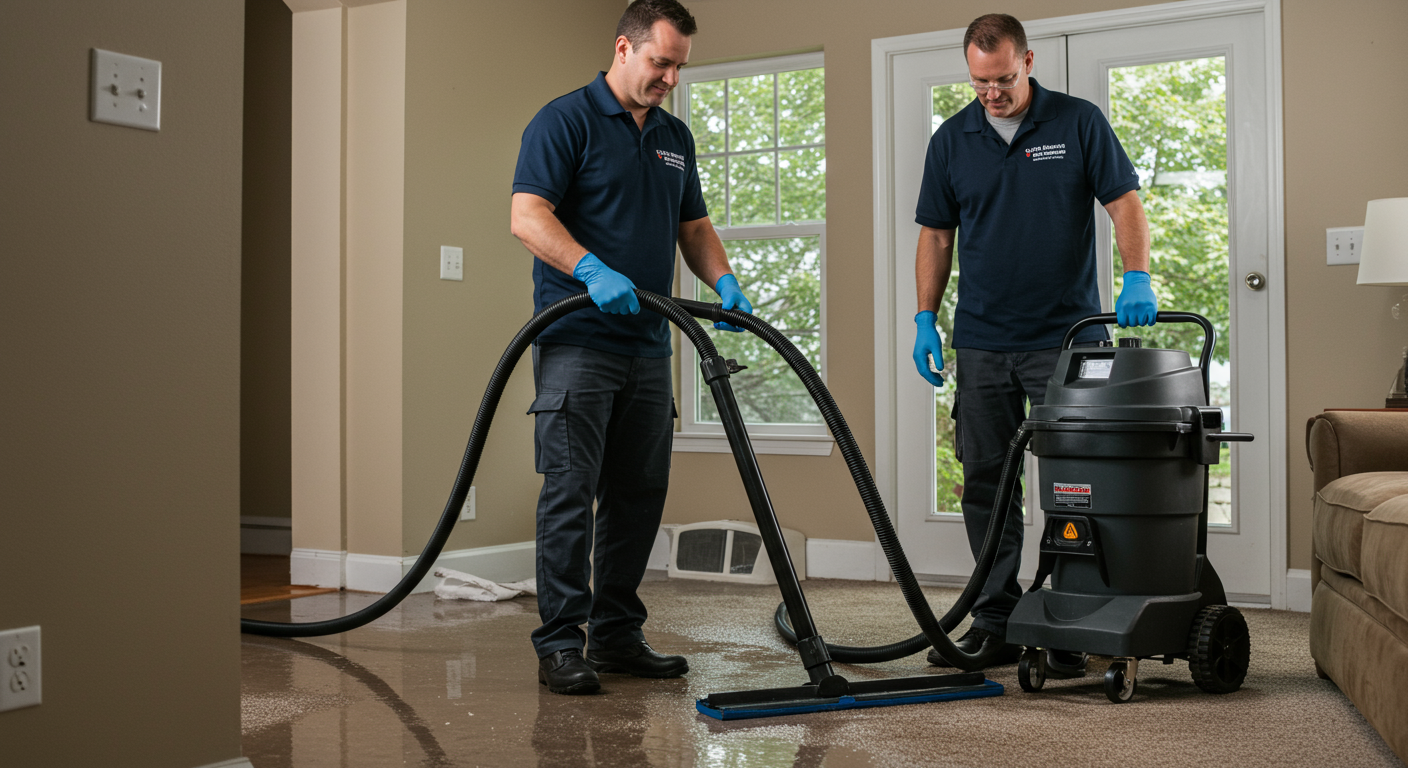
Carpet Water Extraction & Drying in Castle Hills, TX
Truck-mounted extraction, pad assessment & antimicrobial treatment. Serving Castle Hills and all of Bexar County 24 hours a day, 7 days a week.
Expert Carpet Water Extraction & Drying Serving Castle Hills
Wet carpet is one of the fastest pathways to mold growth in a flooded Castle Hills home — and one of the most salvageable materials when treated correctly within the first few hours. Fast Dry Cleanup & Restoration uses truck-mounted extraction systems that remove far more water per hour than any portable unit, followed by specialized under-carpet drying systems and antimicrobial treatment. We assess every affected carpet area in your Castle Hills home and give you honest guidance on what can be saved and what should be replaced.
The challenge with wet carpet in Castle Hills is what's beneath it — not the carpet fiber itself, but the pad and the subfloor below. Carpet pads are designed to hold liquid and don't release it easily. Subfloor assemblies — OSB, plywood, or concrete — absorb significant moisture from wet carpet and pad contact. Even if the surface carpet feels dry, the materials below can remain saturated for days, creating ideal mold conditions that affect your Castle Hills home's air quality and structural integrity.
When floodwater or sewage contamination is the water source, carpet and pad almost always require removal regardless of response time — contaminated water cannot be safely removed from porous materials to an acceptable standard. When the source is clean water (a burst pipe or appliance overflow), rapid truck-mounted extraction followed by professional drying frequently saves carpet and reduces total restoration cost significantly. We assess the water source classification for every Castle Hills project and give you an honest recommendation.
Local Knowledge — Castle Hills, Bexar County
Castle Hills's warm climate accelerates mold development in wet carpet compared to cooler regions — bacteria and mold spores reproduce faster at higher ambient temperatures. Castle Hills sits in the Leon Creek drainage basin and has historically experienced flooding events. The combination of mature trees causing roof damage and aging plumbing in custom homes creates elevated water damage risk throughout the city. When flooding reaches your Castle Hills home's carpeted areas, time is critical. Our carpet extraction team can respond to Castle Hills within 60 minutes and begin high-volume extraction immediately.
Our Carpet Drying Process in Castle Hills
Water Source Classification
Before beginning extraction, we identify and classify the water source. Clean water from pipes or appliances can potentially be extracted and carpet saved. Gray or black water from contaminated sources requires different handling protocols and typically means carpet removal.
Truck-Mounted Extraction
Truck-mounted extraction systems provide 10 to 15 times the suction power of portable extractors. We make multiple slow extraction passes over each affected area to maximize water removal from carpet fibers and underlying materials before beginning drying.
Carpet Pad Assessment & Removal Decision
After extraction, we assess the pad moisture level. Carpet pads hold water tenaciously and rarely dry adequately in place. In most cases, pads are removed and replaced — which is significantly less expensive than the cost of mold remediation caused by a pad left wet too long.
Subfloor Moisture Assessment
The subfloor beneath carpet and pad is tested for moisture using calibrated meters. Wet subfloor must be dried before any new flooring material can be installed. We deploy subfloor drying equipment and monitor readings daily.
Carpet Drying or Disposal
Clean water-affected carpet is repositioned over the bare subfloor and dried with carpet clamp systems and air movers. Contaminated or severely damaged carpet is rolled, bagged, and disposed of. New pad can be installed after subfloor reaches dry standard.
Antimicrobial Treatment & Deodorization
All surfaces — subfloor, framing, and remaining carpet — are treated with antimicrobial agents to prevent mold and odor development. Odor neutralization with hydroxyl treatment or thermal fogging completes the process.
What Our Castle Hills Carpet Drying Service Includes
Warning Signs You Need Carpet Drying in Castle Hills
Why Castle Hills Homeowners Must Act Immediately
Carpet in Castle Hills's warm climate provides ideal mold conditions — it traps warmth and moisture while supplying organic material for mold to feed on. Mold can begin growing in wet carpet within 24 hours. Even when the surface feels dry, the pad and subfloor below can remain saturated for days without professional extraction equipment, creating hidden mold that affects your Castle Hills home's indoor air quality and can spread to adjacent wall cavities. The first 24 hours are critical to carpet salvage.
Common Causes of Carpet Drying in Castle Hills
Frequently Asked Questions — Carpet Drying in Castle Hills
Can you save my carpet after a water damage event in my Castle Hills home?
It depends on the water source and how quickly we respond. Clean water from a burst pipe or appliance failure with rapid extraction often results in carpet being saved. Contaminated floodwater or sewage almost always requires carpet removal. We give you an honest assessment on arrival at your Castle Hills property — no pressure to spend money on carpet extraction that won't succeed.
Why do I need professional carpet extraction instead of using a shop vac in Castle Hills?
Consumer shop vacuums and portable extractors remove a fraction of the water that truck-mounted professional systems can extract. A truck-mounted unit connected to our van has 10 to 15 times the suction power of any portable machine. The difference in water removal in that first extraction pass is the difference between saving carpet and having to replace it in your Castle Hills home.
Does carpet always need to be replaced after water damage in Castle Hills?
Not always. Clean water, rapid extraction, and prompt professional drying frequently saves carpet in Castle Hills homes. However, carpet pad is almost always replaced — it holds water too effectively to dry adequately in place. The carpet itself can often be cleaned, treated, and re-stretched over new pad at a fraction of the cost of replacement.
How long does wet carpet need to dry in a Castle Hills home?
With professional equipment — truck-mounted extraction followed by carpet clamp drying systems — carpet can reach dry standard in 24 to 48 hours in most Castle Hills residential applications. Without professional equipment, carpet in Castle Hills's climate can remain wet enough to grow mold for a week or more, by which point mold is already established.
Is there a smell after carpet water damage in my Castle Hills home?
Wet carpet develops a musty odor as bacteria begin to multiply — this typically starts within 24 hours in Castle Hills's warm climate. Sewage-contaminated carpet develops immediate severe odors. We treat all affected carpet areas with antimicrobial agents and apply hydroxyl or thermal fogging treatment to eliminate odors at the molecular level, not just mask them.
What does it cost to extract water from carpet in a Castle Hills home?
Carpet water extraction costs depend on the affected area, the water source classification, and whether pad replacement is needed. We provide a written estimate before beginning any work on your Castle Hills property. Most clean-water carpet extraction events are significantly covered by homeowner's insurance in Texas, and we handle all documentation for your claim.
We Serve Every Neighborhood in Castle Hills
Carpet Drying Also Available in Nearby Communities
Get Help in Castle Hills
Castle Hills Response Info
More Services in Castle Hills
All Services
Need Carpet Drying in Castle Hills?
Our crew can be at your Castle Hills property in 30–45 min. Call now for immediate dispatch or request a free inspection.